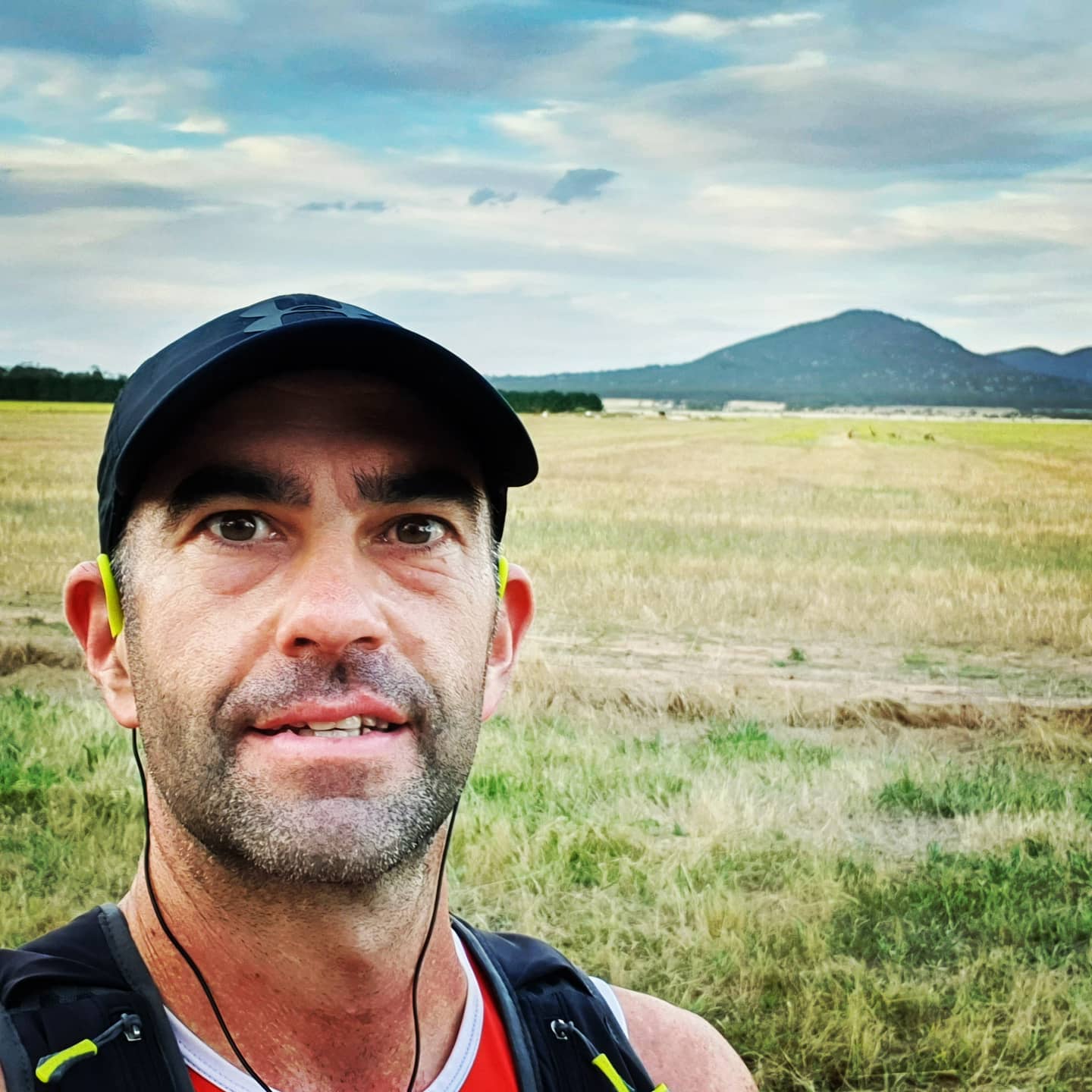
I am a Teaching Fellow in exercise and sport science at Deakin University. Since 2022, my teaching has spanned eight units across physiology, exercise prescription and programming, coaching, motor learning and research methods. I teach every trimester, in seminars, practical and laboratory classes and online, and I also mark assessments. My appointments have included a full-time contract in T2 2025.
Leighton Wells
HSE103
Exercise Prescription and Delivery
HSE104
Research Methods and Data Analysis in Exercise and Sport
HSE105
Principles of Sport Coaching
HBS109
Introduction to Anatomy and Physiology (from T1 2026)
HSE204
Motor Learning and Skill Acquisition (from T2 2026)
HSE208
Integrated Human Physiology
HSE302
Exercise Programming
HSE304
Physiology of Sport Performance
Additional marking: HSE102, HSE110, HSE727.
8
Deakin units taught since 2022
2
Victoria University units with unit-chair duties, 2025 and 2026
At Victoria University, the SSC2000 unit chair delegated its coordination to me in 2025: student communication, seminar updates, self-moderation and grade release. In 2026, I coordinated both deliveries of AHE3114 Sport Physiology while its unit chair was on leave, covering unit news, student support, all marking, self-moderation and grade release.
Different learners
In HBS109 Introduction to Anatomy and Physiology, practical classes bring nursing, medical, occupational therapy and exercise science students together in one room.
Fit with La Trobe's areas
Several of these units sit within the areas La Trobe names for this role. HSE103 and HSE302 teach physical activity and health, and the Exercise Programming curriculum includes strength and conditioning for older adults, postpartum women and people returning from injury. HSE104 Research Methods and Data Analysis, together with the 34,731-session dataset from my doctorate, gives a practical base for sports analytics. In a current Deakin resistance-training and altitude study, I teach lifting technique and run strength testing.
Working with colleagues
In one 2026 Deakin trimester, three colleagues asked me four times to cover classes across four units at short notice. I took the two requests I was free for, three HSE304 sessions and one HSE103 session, and could not take the other two because I was already teaching.
At Victoria University in 2025, I proposed and delivered an endurance sport technology session for SSC2000 Sport Coaching Systems and Technology, drawn from my research. Students built a training week in TrainingPeaks and explained each choice using physiological evidence and the athlete's history and circumstances. The task asked them to interpret data, recognise uncertainty and justify a professional decision.
I also contributed to the unit's development and updated its seminar content.
Marking practice
For the second assessment in SSC2000 in 2025, I marked every group presentation and prepared individual feedback, cohort and rubric-level statistics, and a commentary on common strengths and areas for improvement. I raised an ambiguity in recording individual and group marks with the unit chair and applied the unit chair's guidance.
At La Trobe I would bring that unit-level experience to curriculum work with the colleagues who lead its programs, starting from the learning outcomes and building the cases, data and tasks around them.
Deakin units where my teaching received 100% positive student ratings in at least one teaching period
100%
strongly agree on every SSC2000 Student Evaluation of Teaching item, 2025
My teaching has received 100% positive student ratings in six Deakin units, in at least one teaching period for each: HSE103, HSE105, HBS109, HSE208, HSE302 and HSE304. In HSE208, that result came in T3 2025 and again in T2 2026. At Victoria University, every Student Evaluation of Teaching item for SSC2000 in 2025 was 100% strongly agree.
Students' written comments describe what they valued.
AHE3114 Sport Physiology
You have a great presence in the classroom, and your ability to connect research with real world sporting scenarios made the learning experience that much more valuable.
I genuinely appreciated the way you delivered the content, challenged my/our thinking and provided constructive feedback when warranted.
Thank you for making my final unit not only enjoyable, but challenging in a good way.
AHE3114 student, Victoria University
HSE208 Integrated Human Physiology
Really good at helping work through the practicals and the seminars.
Patient with class and explained concepts when asked
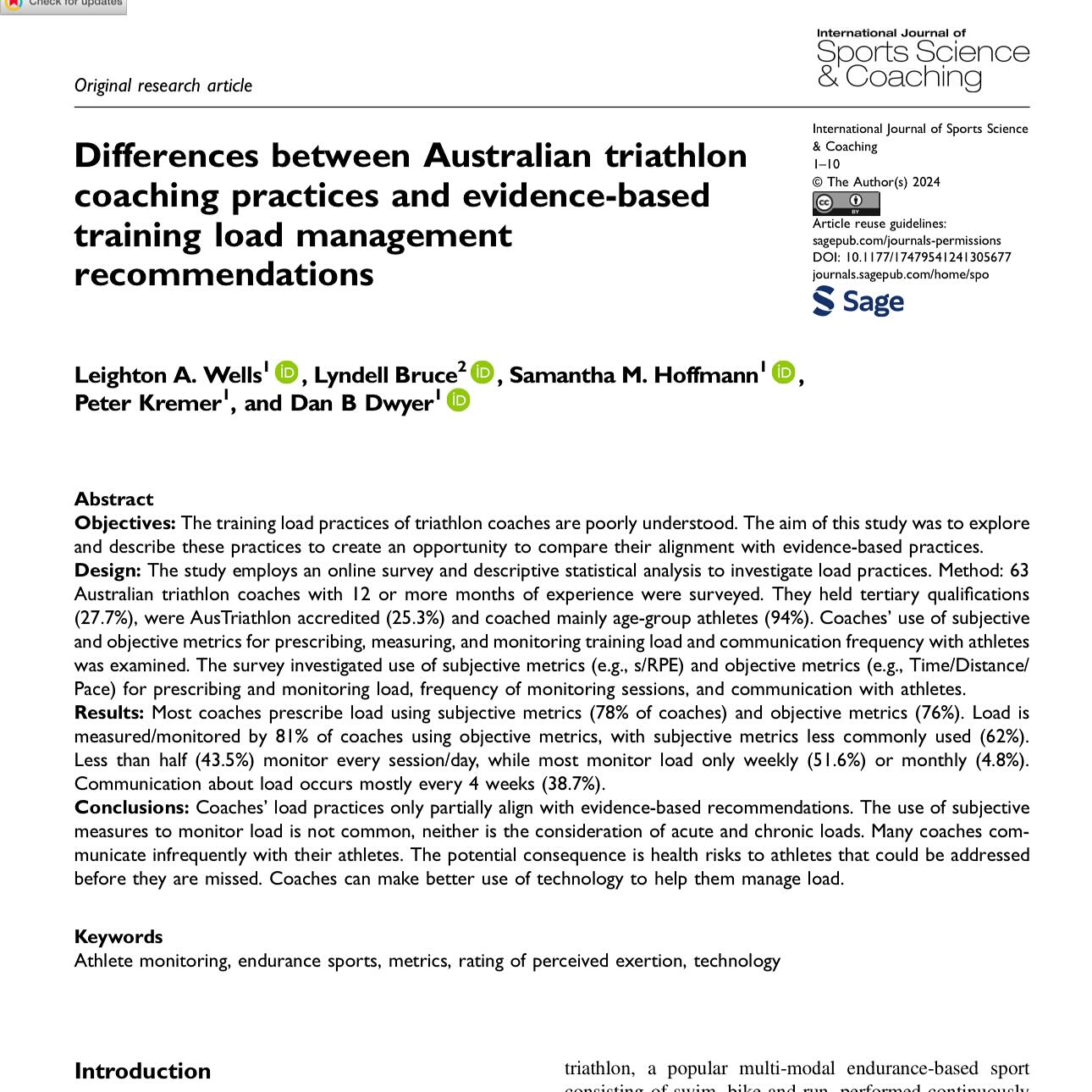
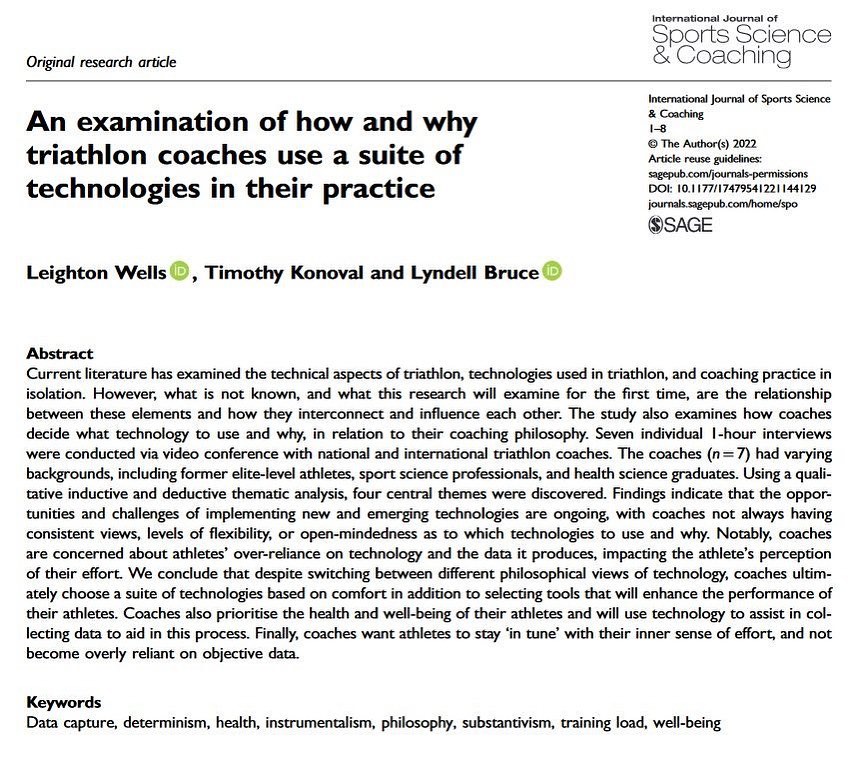
My doctorate examined how triathlon coaches prescribe, measure, monitor and manage training load. The work combined a national survey, interviews, six months of athlete training data and a coach-education intervention. I completed my PhD in Sport Science at Deakin University in December 2025 and graduated in February 2026.
Thesis Figure 1 · p. 25
1Prescribe Load
Design the optimal prescription of load in a training program
Make careful choices about which load metrics to use
Include metrics that are also used in “2. Measure Load”
2Measure Load
Using measures of External Objective (EL) and or Internal Load Objective and Subjective (IL)
This might include “life load”
May also measure Internal Load Response (ILR) variables
3Monitor Load
Make comparisons between prescribed and actual load (adherence)
Identify changes in the relationship between EL and IL
Based on interpretations that occur as a part of Load Monitoring, make decisions about adjustments to Prescribed Load
Include consideration of Life Load, the need for functional over-reaching and proximity to competition / the need to taper
An example of a Training Load Process encompassing the prescription, measurement, monitoring and management of Training Load (TL). Doctoral thesis, Deakin University, 2025.
Part 01
Understanding what coaches do, and why.
The survey examined coaching practice against published recommendations. Interviews then explored the reasons behind coaches' decisions. Coaches were often adapting to the demands of their athletes' lives. The research identified opportunities to improve monitoring and communication while retaining coaches' understanding of the individual athlete.
Thesis Figure 9 · p. 56
Even though RPE was regularly used to prescribe load, it was one of the least commonly used load measurement metrics (62%).
Prescribe Load
RPE or session RPE (sRPE): 78%78%
Time/Distance/Pace: 76%76%
Physiological metrics (HR, lactate): 70%70%
Qualitative Feedback: 63%63%
Measure Load
Time/Distance/Pace: 81%81%
Load or intensity (power/TSS/TRIMP): 73%73%
Physiological metrics (HR and lactate): 67%67%
RPE: 62%62%
Comments in training diaries: 59%59%
RPE: Rating of Perceived Exertion · HR: heart rate · TSS: Training Stress Score · TRIMP: Training Impulse
The prevalence of load prescription and measurement metrics used by coaches. The percentages represent the proportion of coaches that use each metric. Participants could select multiple options.Study 1A, a national survey of triathlon coaches · Wells et al., 2025, International Journal of Sports Science & Coaching.
You can be getting great data, and the athlete is falling into a hole, and you're not picking it up because everything looks great, and the compliance is high and all those sorts of things.
Coach 3 · Study 1B interviews · thesis p. 72 · Wells et al., 2026, International Sport Coaching Journal
Part 02
Working with the training record.
TrainingPeaks records from 95 age-group triathletes provided 34,731 sessions over six months. The study examined training load and intensity, with explicit data-cleaning rules and analysis by age, sex, race-distance preference and training phase.
34,731
Training sessions, recorded in TrainingPeaks
95
Age-group triathletes, six months of training data
These phase-specific variations in the present study indicate that age-group triathletes appear to be following periodised training plans.
Thesis p. 93
Thesis Figure 13 · p. 90
Measures of TL relative to the General phase
0%
+21%
−14%
−38%
GeneralSpecificTaper/Race/PostOff season
Relative to the General phase, measures of TL were 21% higher in the Specific phase, 14% lower in the Taper/Race/Post phase and 38% lower in the Off season phase. No statistically significant differences in training load by athlete sex or age group were detected in this cohort. Study 2, a retrospective cohort of 95 age-group triathletes recorded in TrainingPeaks · Wells et al., 2026, Frontiers in Sports and Active Living.
In research-methods and data-analysis teaching at La Trobe, I would use this study to work through data cleaning, comparisons between groups and the limits of observational evidence.
Part 03
Testing a change in practice.
A coaching-education study combined training records, communication activity, athlete surveys, coach ratings and interviews. Two coaches and 17 athletes took part across a six-week control period and six-week intervention. Coach comments on the training platform increased more than fourfold. No statistically significant differences in athlete perceptions or training adherence were detected during the six-week intervention.
Thesis pp. 103–105
Results indicated subjective improvements in overall TL practices.
Pre-interventionPost-intervention
Self-rated TL practice · both coaches: 5 out of 10 before, 8 out of 10 after
5 → 8/10
Self-rated communication effectiveness · Coach 1: 4 out of 10 before, 9 out of 10 after
4 → 9/10
Self-rated communication effectiveness · Coach 2: 5 out of 10 before, 7 out of 10 after
5 → 7/10
Coach comments per week increased significantly for both coaches post-intervention (p < 0.001).
The number of athlete comments per week did not change significantly from pre- to post-intervention (p > 0.05).
Study 3, a coach-education intervention with two coaches and 17 athletes · thesis pp. 103–105.
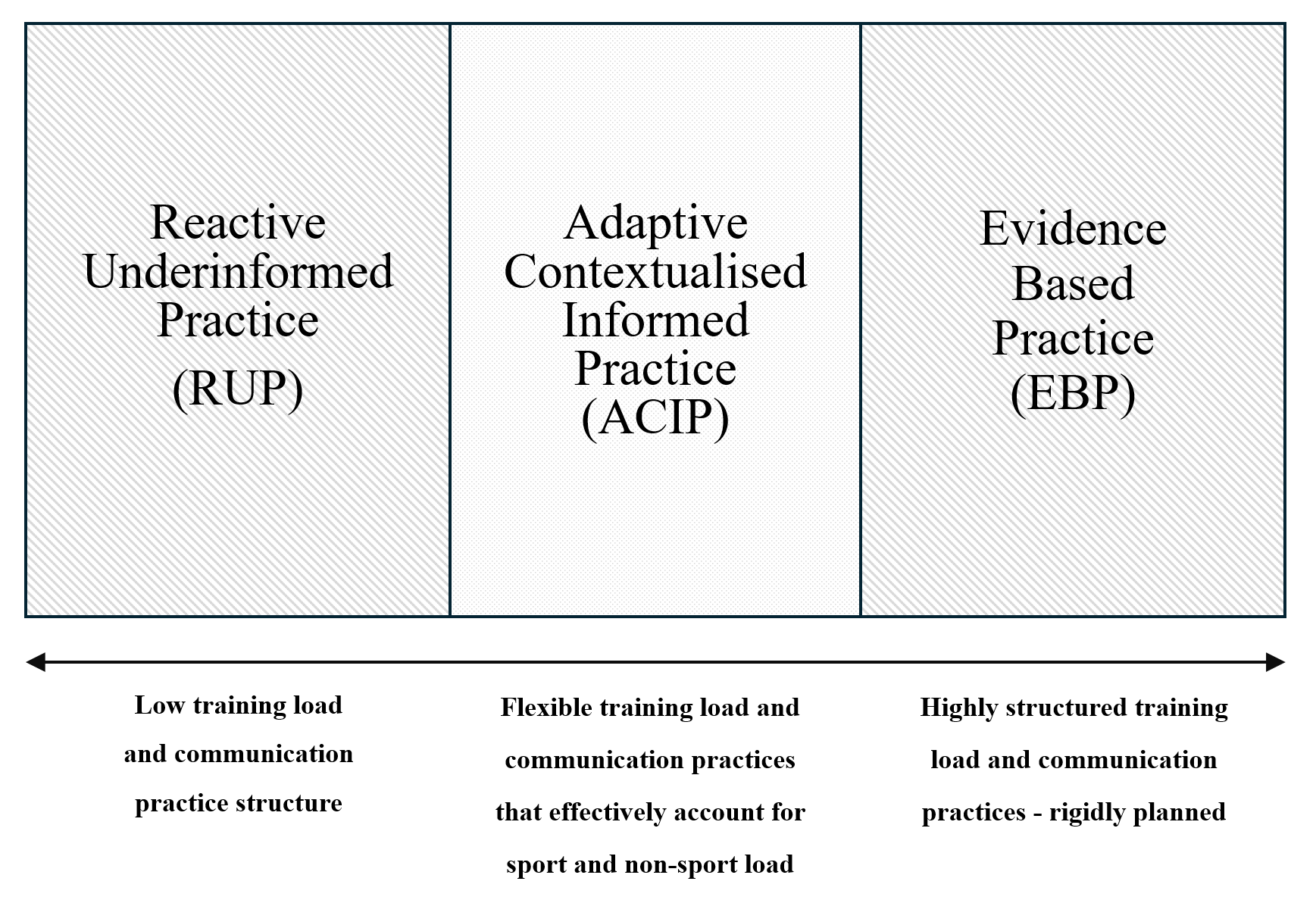
RUP–ACIP–EBP Training Load and Communication Practices Spectrum
Adaptive Contextualised Informed Practice is the proposed approach developed in the thesis: planned training, objective information, feedback and the capacity to respond when life changes. The approach has not been empirically validated.
RUP
Reactive Underinformed Practice
Low training load and communication practice structure
Definition
Low training load structure. Minimal planning, minimal objective and subjective data utilisation. Reactive to life load.
ACIP
Adaptive Contextualised Informed Practice
Flexible training load and communication practices that effectively account for sport and non-sport load
Definition
Structured training load, planned with flexibility in mind. High objective data utilisation with an emphasis on subjective data (feedback and context) utilisation. Highly responsive to life load.
EBP
Evidence Based Practice
Highly structured training load and communication practices, rigidly planned
Definition
Highly structured training load is rigidly planned. Low flexibility, high objective and subjective data utilisation. Interpreted as rules to adhere to. Less responsive to life load.
RUP–ACIP–EBP Training Load and Communication Practices Spectrum · thesis Figure 20, p. 122View detail+
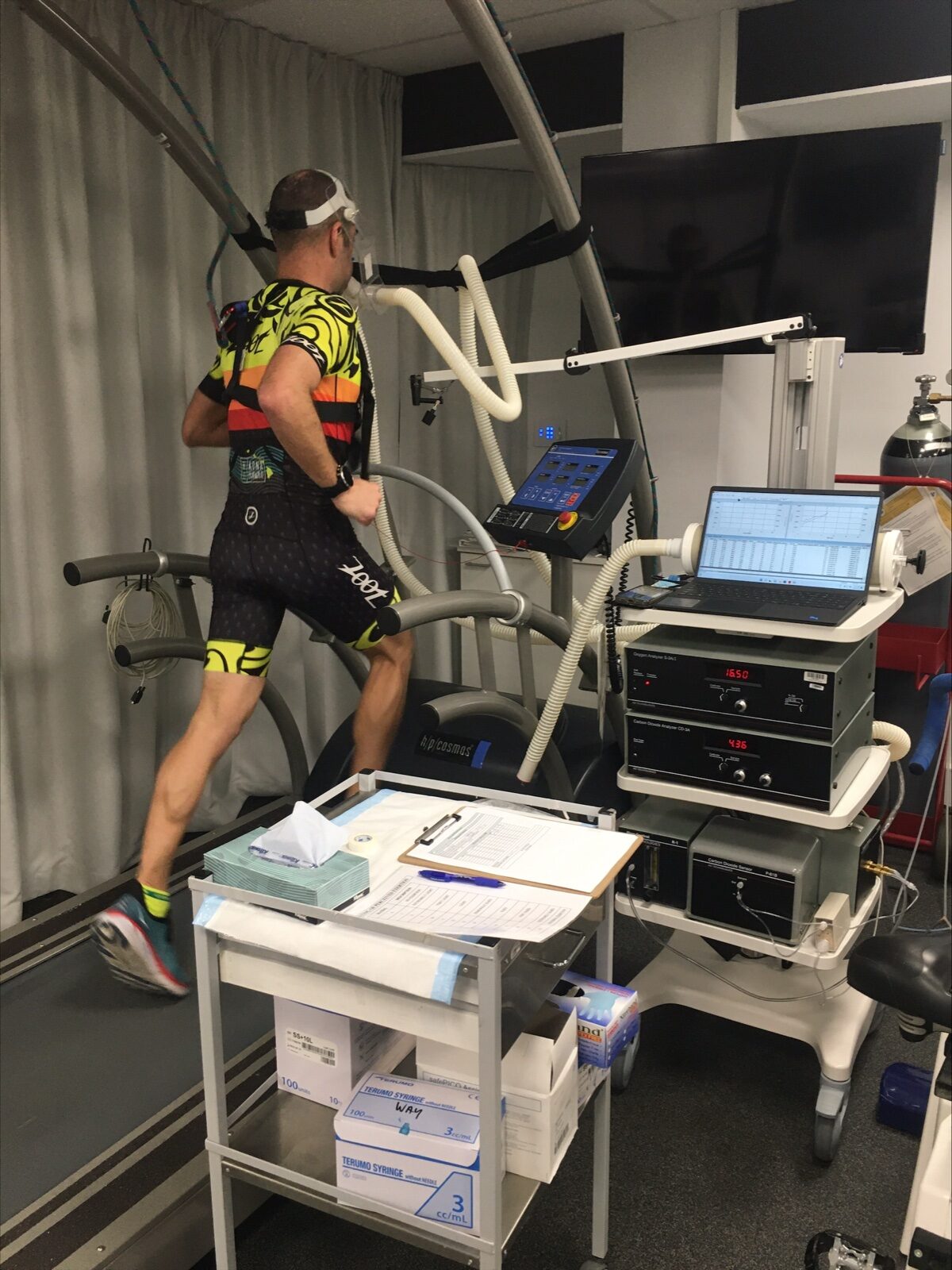
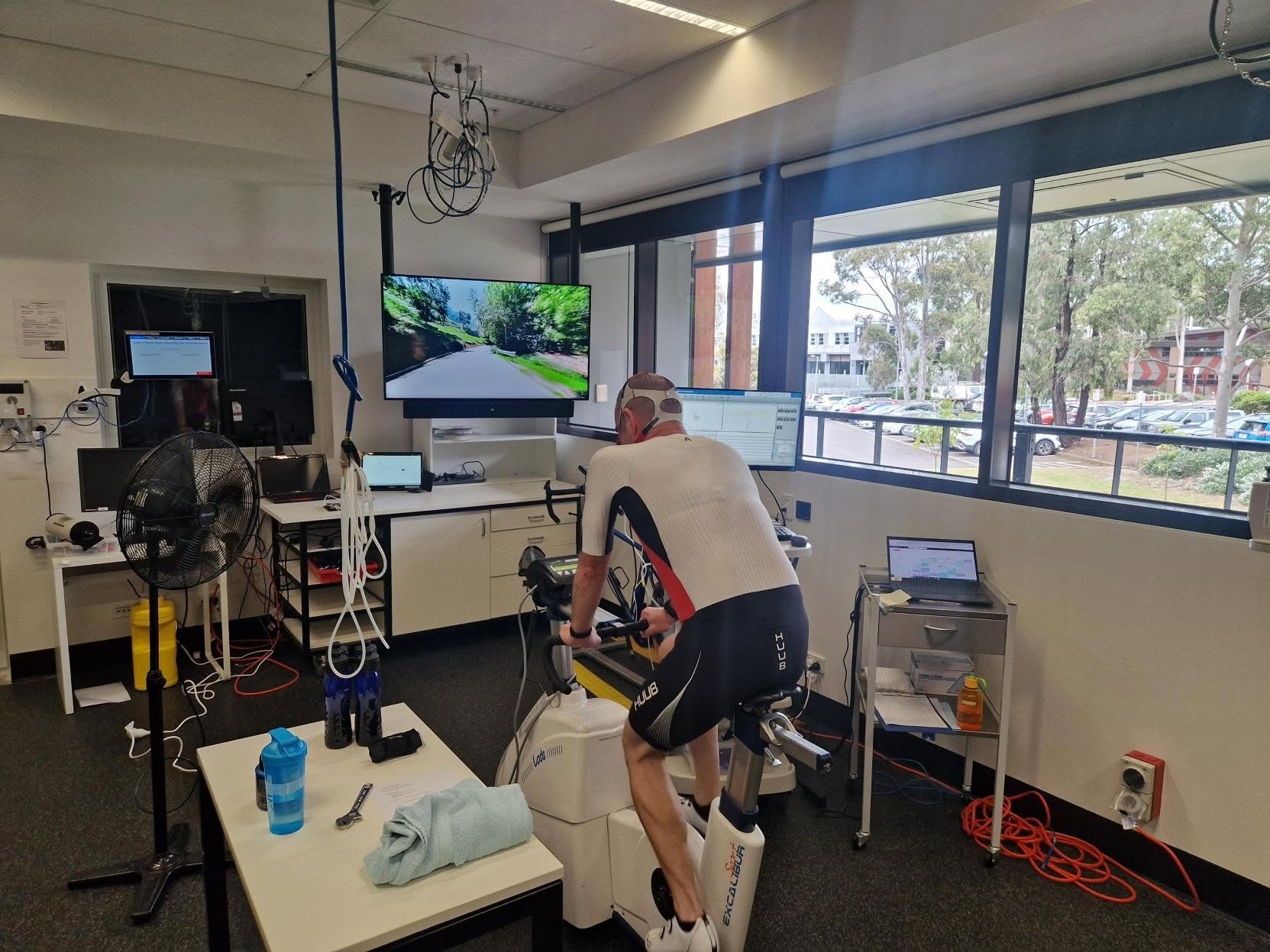
Leighton Wells undertaking a treadmill VO₂max test.
Research practice
In the current Deakin resistance-training and altitude study, I recruit participants, teach lifting technique, run strength tests and laboratory protocols, and mentor an honours student. As a Deakin Research Assistant in 2023, I tested the energy-expenditure accuracy of GPS sport watches, including sub-maximal VO₂ testing of recreational runners on a clinical-grade treadmill with a MetaLyzer.
I conclude that this thesis is an original scientific contribution that meets or exceeds international standards for the Doctor of Philosophy in sport science. I recommend its approval without reservation.
The doctorate produced three first-author peer-reviewed papers, and my master's research produced a fourth. A fifth paper, reporting the education intervention, is in second-round review.
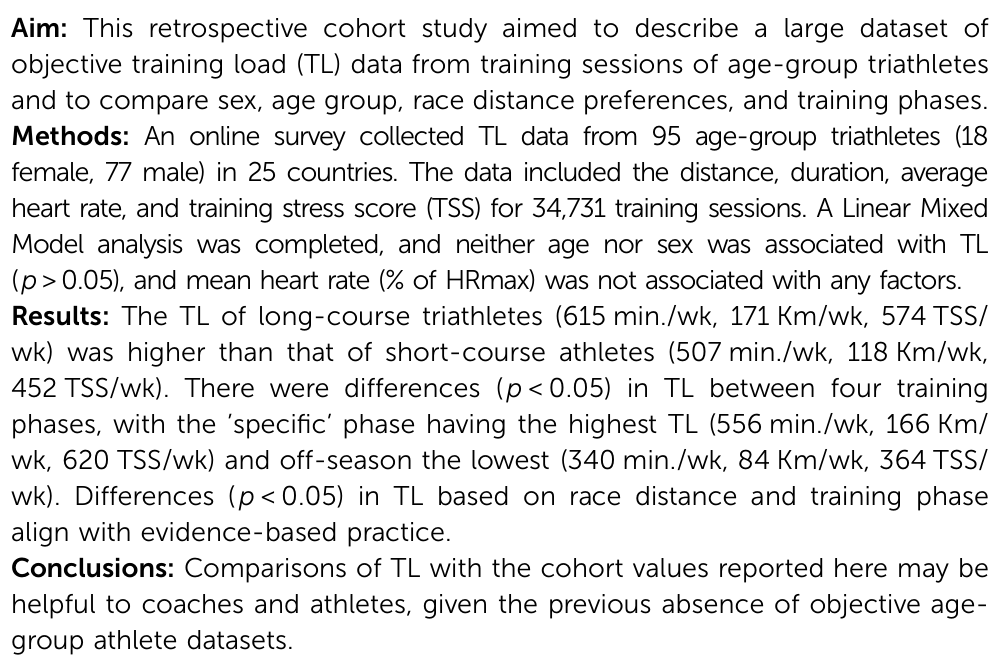
Training load and intensity in triathlon: objective differences between sex, age, race distance preference and training phase across a cohort of 95 age-group triathletes over six months
Three papers on AI-assisted research methodology in sport science, with Professor Stephen Seiler, Professor Marco Cardinale and Palo Galko.
Peer review
Journals including the International Sport Coaching Journal, the International Journal of Sports Science & Coaching, Frontiers in Sports and Active Living and Frontiers in Physiology regularly invite me to review manuscripts.
AusTriathlon × TrainingPeaks · Queensland Academy of Sport · December 2024
Coach education
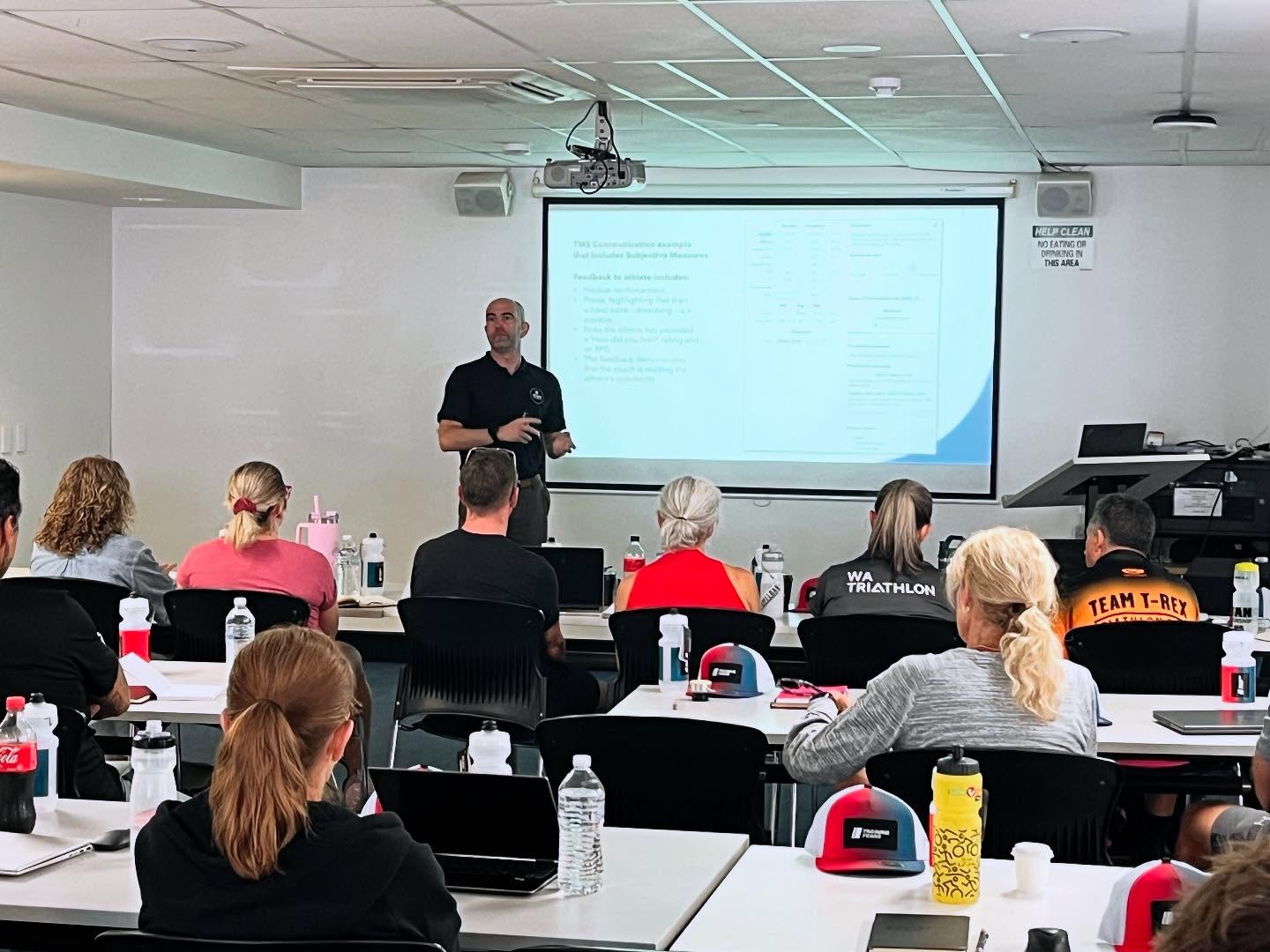
AusTriathlon and TrainingPeaks invited me to present my research at the Queensland Academy of Sport in December 2024, adapted for development, performance and Olympic-level coaches. AusTriathlon then asked me to deliver a national webinar on training load and communication, open to its coaching membership.
AusTriathlon Coach Connect · Load Management · 19 February 2025
Researchers and peers
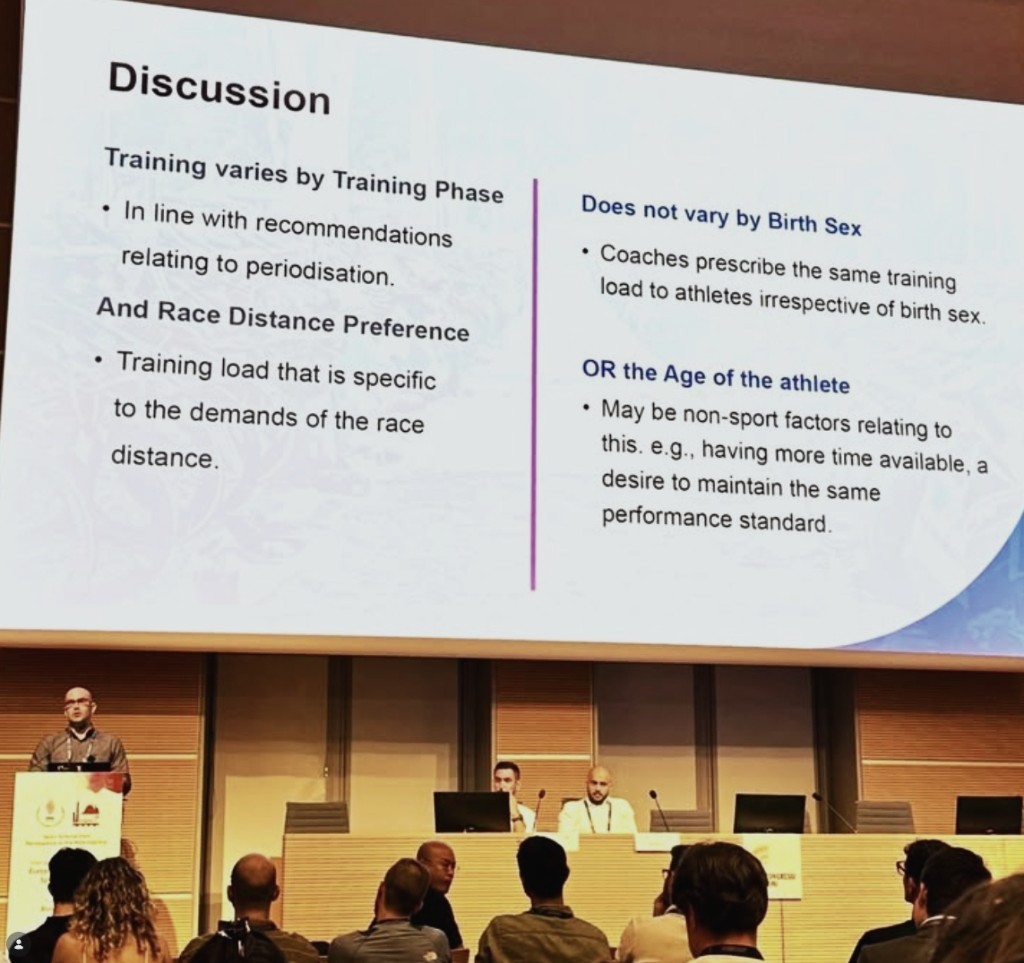
For researchers, I presented the doctoral findings at the European College of Sport Science Congress in 2025.
European College of Sport Science Congress · Rimini · July 2025Deakin SENS in-house conference · 2023
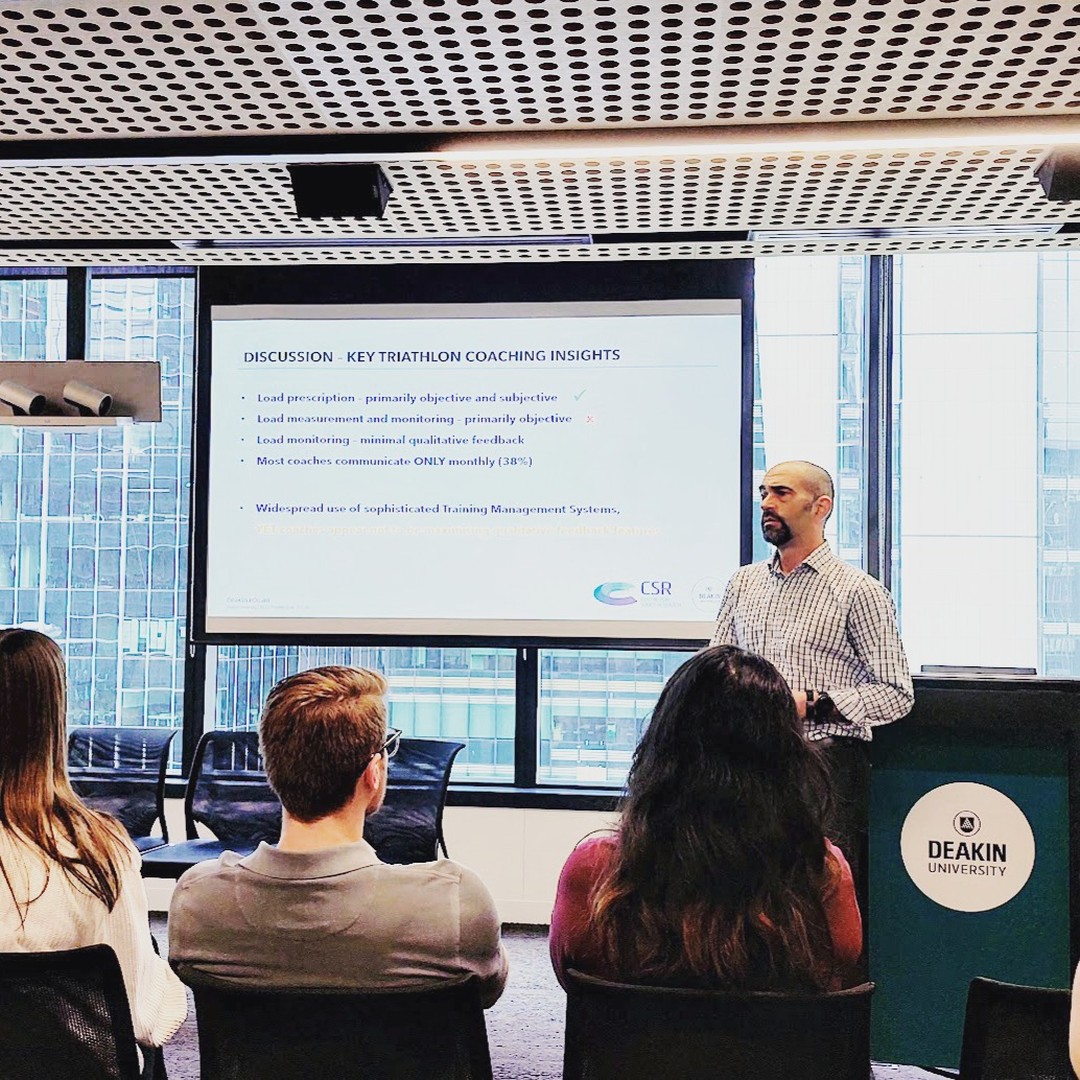
Helping other PhD students pilot their studies.
Students, outreach and mentoring
At Deakin Open Days in 2023, 2024 and 2025, I rode for about five hours a day to demonstrate the training technology athletes use, from novice to elite level. In 2025 I co-supervised a Master of Applied Sport Science candidate whose research examined menstrual-cycle symptoms and perceived performance in female triathletes. The candidate earned a High Distinction. I currently mentor an honours student within the resistance-training and altitude study.
I wanted to sincerely thank you for your support and guidance throughout the IPAN Research Excellence Programme.
Deakin University student, IPAN Research Excellence Programme
Coaching and practitioner writing
TrainingPeaks commissioned an article from my 2026 Frontiers paper for its international coaching audience. I also coach athletes in Australia and internationally, where each plan has to fit the athlete behind the training: their background, schedule and goals.
Twenty years working with athletes, more than thirty years in triathlon and seven Ironman finishes.
Technical writing
Written communication began in industry. I wrote manuals and made help videos for scientific instruments as a technical writer at Varian. Later, as Marketing Communications Manager at GBC Scientific Equipment, I managed the team producing them for a wider range of equipment.